Showing posts with label Review. Show all posts

Tuesday, 10 May 2016

Album Review: Kano “Made in the Manor”-Grime Grows Up

Press Release Image
Grime’s recent revival seemed for a long time to have passed Kano by, with nothing heard from the writer of “P’s and Q’s” long after Stormzy had appeared seemingly from nowhere, JME had released his most successful album to date and Skepta and Lethal Bizzle had dragged Grime from Room 2 into the spotlight with “Shutdown” and “Fester Skank” respectively.

“Made in the Manor” is Kano’s answer to the question posed by his absence, and by and large it’s a very satisfying answer indeed. From the opening Track “Hail”, with its ominous backing track and driving bass, through to standout track “3 Wheel-ups” featuring stellar verses from Giggs and Wiley, it seems like Kano has lost none of his ability or aggression during his time away. The album does tail off slightly in the middle, with slower songs like “Little Sis” and “Deep Blues” featuring Damon Albarn blunting the raw energy of the opening salvo, before switching back to the original fury on the bonus tracks “Garageskankfreestyle” and “Flow of the Year” featuring JME. The middle portion is packed full of meaning and is obviously deeply personal to Kano, but musically it just doesn’t work quite as well as the more ‘traditional’ and aggressive Grime tracks at the beginning and end of the album, and would perhaps work better if it wasn’t sandwiched in between said tracks.

Part of Kano seems happy to revel in the lifestyle of the Grime superstar, with the line “Pussy and rum, that’s a rider for real OG’s” on “3 Wheel-ups” clearly showing that poetry doesn’t have to be meaningful to sound great. On the other hand “Made in the Manor” is more introspective than Grime has ever been before and songs like “Deep Blues” show that Kano isn’t scared to provide a critical look at his childhood and the violence and death that came with it. Just don’t expect the songs that grapple with these issues to be as catchy or danceable as others on the album and you’ll appreciate them a lot more, even if they do make the album feel more than a little bit schizophrenic.


Overall “Made in the Manor” is as much a trip down memory lane as it is a brand new album, with call-backs like “back when Lethal Bizzle was Lethal B” and references to D Double E and “Doin’ it Again” by Skepta being a clear nod to Grime’s heritage and the original artists that are taking part in the current revival. This sense of nostalgia goes further than the Grime scene however, with constant references to London and its history, from Reggie Kray to jellied eels and wagon wheels, showing that no matter how many US rappers are signed to BBK and how many American tours artists like Skepta go on, Grime is still a peculiarly and proudly British phenomenon, one that was born in London and Made in the Manor.

Saturday, 26 March 2016

All Wizard, No Sleeves: Wizard sleeve/Chilli Gibbons and the Purple Monk: 26th March 2016

Picture: Callum Bunker
Wizards sleeve had their EP launch last night and, despite the absence of an EP to be launched (or even a proper stage), showed everyone there what a band can do using a couple of distortion pedals, a dressing up box they found in the loft and a barrel or three of beer.

The gig was on a boat cobbled together out of a couple of buses and decorated with enough animal skeletons to supply a lifetimes worth of nightmares, as well as artwork from Callum Farrell and Abbie Brothers that had been shipped in for one night only and went a long way towards making the place look more “gig” than “someone’s living room”, which is always a danger when the venue actually is someone’s living room. Wizard Sleeve added their own artistic flair with balloons with “Ned Flanders votes Trump” scrawled on in sharpie and a merch stand consisting of a couple of plant pots, a de-icer and a lovely picket fence. It was all a bit weird basically, and at one point I did feel like checking that nobody had slipped any LSD into my beer, especially when a band member wandered off and came back wearing a kilt.

Support was from Chilli Gibbons and the Purple Monk, a two piece band described by their singer as “Garage, Folk and Grunge” (no, not the Craig David kind of Garage, sorry to disappoint) although the emphasis was definitely on the first and last of those three, with the frontman all bulging veins and sweat as he blasted through possibly the shortest set I’ve ever seen a band play, with 4 or 5 songs condensed into about ten minutes of snarl and swagger.

After Chilli Gibbons and the Purple Monk’s Blitzkrieg set was over Wizard Sleeve themselves took to the stage, sharing the same singer as the support (although he had at least changed his shirt in an attempt to stop people noticing). They opened with a bizarre cover of Fat White Family’s “Borderline” performed by Bassist Luke Davies in a crooning Scottish accent, but quickly slammed into their set proper, a kind of psychedelic Punk inspired metal, including an excellent version of “She’s Not There”, more reminiscent of the UK Subs’ cover than the Zombies original and all the better for it.  The band mix the overblown style of early heavy metal with a collection of clothes that include the previously mentioned kilt, an Anonymous-style Guy Fawkes Mask and what can only be described as a bargain basement steampunk ogre outfit, all helped along with a generous mix of face paint and beer. My only real complaint is that the venue was above ground, because if any band is designed for a sweaty basement gig it’s this one.


Overall Wizard Sleeve seem as cobbled together as the boat they were playing on, a hybrid love child of Fat White Family and Black Sabbath that seems to have been dropped on its head at an early age, and by god I love them for it.

Wizard Sleeve are on Soundcloud: https://soundcloud.com/wizard-sleeve
Chilli Gibbons and the Purple Monk aren't online in any form, maybe I hallucinated them after all.

Friday, 11 March 2016

Review-Blossoms at Sub89, Reading- 10th February 2016

Picture: James Polley
 https://jamespolleyphotography.wordpress.com/
Recent contenders for the BBC’s Sound of 2016, Stockport based shoegaze rock band Blossoms played Sub89 on the 10th of February to a crowd consisting of a mix of 18-21 year olds and 50-60 year olds, with seemingly little in between. Rumour has it that Radio 6 DJ Steve Lamacq turned up but he could’ve been any one of the grey haired men sipping Guinness in the crowd so who knows how much truth there was in that.
Support was in the form of Viola Beach, described by one of their members as “Candy floss in sonic form” and The Vryll Society, who went with the slightly more cryptic description of “Esoteric expansion”.
Blossoms themselves were on excellent form, with each song being received like a fan favourite and the band not putting a foot wrong throughout their (admittedly quite short) set. Breakout hit ‘Charlemagne’ was the highlight of the night, almost being drowned out by the sound of a room full of drunk fans shouting the words, no mean feat considering the song’s only been out for a few months and with this in mind it’s a shame they didn’t save it for last, with the stellar finisher ‘Blow’ seeming a bit of a letdown after the euphoria that preceded it.
The set list itself was predictable, as the band only just have enough songs to carry off a headline slot, so the only real surprise they could manage was the order they’d be playing them in. This is no bad thing however, with the feeling of seeing a band on the cusp of something big lending their performance even more energy.
It’s also nice to see three bands that are clearly having the time of their lives, with a special mention to Viola Beach trying to sell people t-shirts via hypnosis and an old scouser telling me not to call them shoegaze because “shoegaze used to be an insult, y’know?” Well sorry mate I’ve done it but I mean it as the highest praise, I promise.
Overall it’s clear to see that Manchester’s reputation for generating the next big thing (well alright, they’re from Stockport, but that’s close enough for me) is well deserved, with Blossoms a clear candidate for 2016’s breakout indie band. Expect to see them on the cover of the NME looking nonchalant any day now, as in the words of front man Tom Ogden “We just want to be as big as we can” and if their performance at Sub 89 is anything to go by, that’s going to be pretty damned big.


Since writing this review the members of Viola Beach have tragically passed away in a car accident, along with their manager. My thoughts and condolences go out to all involved and I hope that the outpouring of support that ensued provided some small comfort to those who knew them.

Wednesday, 2 March 2016

Review-Adrenalin Baby-Johnny Marr Live

Press release image
Johnny Marr, best and most fondly remembered as the guitarist and co-writer for The Smiths, has mounted somewhat of a comeback over the last few years, with two solo albums both well received by critics and fans alike. Adrenalin Baby is somewhat different, being a live album recorded from Marr’s tour and including hits from The Smiths’ back catalogue as well as his own and even featuring a cover of The Clash’s famous song I Fought The Law, but the real question is: how well does it hold up?

The answer is surprisingly well, as a confusingly long barrage of noise at the start of Playland soon gives way to a punchy sound that blends Marr’s considerable talent on the guitar with surprisingly slick vocals reminiscent of a pumped up and slightly more in tune Noel Gallagher, although that could be just be due to the Mancunian connection between the two. Between songs the crowd are enthusiastic and the man himself offers a few choice phrases but this crowd noise is only present between numbers and is not allowed to interfere with the songs themselves, meaning you never feel like you have to fight through the cheers to get at the music, an annoyance that many live albums  suffer from.

Marr’s performance on Smiths classics like Bigmouth Strikes Again and There is a Light That Never Goes Out is equally good, with Marr’s guitar being as inimitable and brilliant as ever and his vocals doing a surprisingly good job of fitting the song without devolving into a poor man’s Morrissey karaoke set, something that is easily done (it’s also nice to be able to hear the lyrics that often get lost in Morrissey’s trademark warble). The Post-Smiths offerings are in places just as good and Adrenalin Baby plays like something of a greatest hits for a man that has been active in the industry for so long and has often been unfairly overlooked. Whilst waiting for the first song by The Smiths you realise that Johnny Marr’s made some damned good songs (listen to New Town Velocity and you’ll see what I mean) and many of them may have passed you by, I know they did me.


Overall Adrenalin Baby is a great introduction to Johnny Marr’s solo career and just goes to show that even if he doesn’t make the headlines as much as Morrissey, and may not have the same rabid fan base, he’s still a hell of a musician and a pleasure to listen to. From somebody that has seen Marr live I can also attest to the fact that the crowd reaction in this album isn’t at all staged, he really is that good live and I’d recommend both his live set and this live album to anyone.

(Originally published in The Spark*)

Wednesday, 17 February 2016

Review-Maribou State at Purple Turtle, Reading- 16th February 2016

Maribou State at The Art School, Glasgow in 2015
Picture: Matthew Swan/Flickr
Electronic duo Maribou State played a warm-up gig for their upcoming UK tour on Tuesday, taking to the (admittedly small) stage of Purple Turtle in Reading for a live set. Hard to pin down as far as genre goes, Maribou State’s online descriptions range from garage to instrumental hip hop to contemporary R&B, but sound-wise they slot easily into place as a more downbeat Disclosure, something like Bondax on a comedown, or a slightly less orchestral take on Bonobo.

Support was from the excellent Twin Sun, who described themselves as “unpretentious and summery” although Pete Wheeler, one half of the duo, said he preferred my initial impression of “Being inside a cartoon spaceship”, so pick whichever of those you prefer. Maribou State (billed as “Ian & I” in perhaps the worst kept secret set of all time) came on at around half ten, playing an hour long set complete with live drummer and an array of guitar pedals that were confusing to look at, let alone use. Being at a gig that fits more into the “3am start and a bucket of MDMA” category at half ten after only a couple of pints was a strange experience, although as somebody that isn’t a huge fan of the genre it was nice to be able to stand and appreciate what was happening without a stranger telling me how much they love me whilst chewing through their own tongue. The music itself was enjoyable and it was impressive seeing how well something clearly originally made on a laptop translated into a traditional band setup, and even if it was reverse engineered it did somehow seem more authentic than a DJ set, which can only be a good thing.

The highpoint of the gig were the songs with vocalist Holly Walker, who added a focal point that some of the set was lacking, and actually managing to get a relatively sober crowd dancing and singing along to a remix of “Praise you” by Fatboy Slim towards the end, even if she did have to ask everyone politely to join in before they let themselves have a bit of fun. The feeling of the set being a warmup for bigger things was definitely there and I’d say that their upcoming gigs will probably be better, but that’s to be expected at an event that’s clearly intended to test out their set before sold out gigs around the country and hey, for a free entry gig on a Tuesday night it was still good fun, so I can hardly complain.

Overall if you’re a fan of Maribou State, Tuesday’s gig probably wasn’t the best place to go and see them, with a pretty static crowd and an early set time making it more of a taster for people that are on the fence than a night out for the converted. Having said that the songs were good, the playing was incredibly tight (especially considering they didn’t start out as a live act) and the people there were definitely enjoying themselves, even if they were just tapping their feet and sipping a vodka coke rather than shuffling manically with a bottle of water in their hand as I feel the crowd at their future gigs may well be.

Both acts are on Soundcloud:
You can listen to Twin Sun here: www.soundcloud.com/twinsunmusic
and Maribou State here: www.soundcloud.com/mariboustate

Saturday, 13 February 2016

Review-Tame Impala at The Alexandra Palace- 12th February 2016


Australian psychedelic rock Band Tame Impala took over the Ally Pally last night, playing a sold out gig to thousands and clearly having the time of their lives. Support was from the excellent Jagwar Ma, although thanks to the delights of London’s public transport system we managed to arrive as they walked off stage, which was hardly ideal.

Refusing to be put out by our late arrival we forced our way through the crowd and waited for the main event. When Tame Impala came on they did so accompanied by a light show straight out of a 1960’s LSD trip and started with into one of the biggest songs from their newer album, the stellar “Let it Happen”. The crowd reaction was incredible, but slightly bizarre, with almost a mosh-pit opening up at the front and people leaping around as if it was 1977 and the Sex Pistols had just launched into “Anarchy in the UK”, not what I was expecting from the decidedly mellow, psychedelic feel of Tame Impala. This was the first of a few times during the gig that the band seemed a bit out of place in the traditional gig setting, their set was tight, the songs were great and lead singer Kevin Parker’s rapport with the crowd was undeniable, but it seems strange that a band whose frontman is listed as playing “Vocals, Guitar and Kazoo” on their Wikipedia would provoke such an energetic and at times violent response. The security at the gig also detracted from the free-love aesthetics of the visuals and music, demanding that nobody get on each other’s shoulders, crowd surf or breath in the wrong direction, perhaps understandable when trying to police such a massive crowd, but still a bit of a mood killer.

Overall Tame Impala played a fantastic set, with an encore consisting of the old favourite “Feels Like We Only Go Backwards” coupled with new song “New Person, Same Old Mistakes” and a blast from two massive confetti cannons summing up the exuberance and fun that should have permeated the whole gig. Unfortunately a cold February night and a ten thousand strong crowd don’t easily gel with the band’s sound, and no matter how great they were there was always the feeling that really, you’d rather be listening to them whilst lying in a field on a summers day with a cold pint in one hand, not standing jammed into a sweaty teenagers armpit drinking warm Carlsberg out of a paper cup whilst an overenthusiastic fan elbows you in the kidneys from behind.

Monday, 2 February 2015

Novel: Brave New World

"I don't want comfort. I want God, I want poetry, I want real danger, I want freedom, I want goodness, I want sin."

Aldous Huxley's Brave New World, along with George Orwell's 1984, remain the two cornerstones of 20th century dystopian future, with each having a very different take on the horror that the modern world could progress to. Brave New World's future is a sterile one, with consumerism and comfort being emphasised whilst "smut" such as religion and family life is banned, the words themselves reduced to crude obscenities. In this world everything is mass produced, including people, and Henry Ford, proponent of the assembly line and the father of mass production, is revered as a kind of god.


The novel opens with a description of the "Central London Hatchery" in which eggs are fertilised by machines and the perfect amount of people of varying intelligence are created to maintain the current population of the planet. From this introduction the story turns to Bernard Marx, a man whose lacklustre appearance has led to him being a social outcast, which in turn has made him question the society of subliminal messaging and meaningless entertainment in which he lives. Bernard's friend Helmholtz Watson also questions the system, not because he has any physical deficiency but rather mental excess, and throughout the novel Bernard's put upon, self pitying attitude is contrasted with the genuine philosophical curiosity of Helmholtz. The third major character is John, a man who has grown up on a reservation for "natives" and as such has no knowledge of advanced society, instead living in a kind of tribe in New Mexico, safely fenced off from the outside world.

Whilst most Science Fiction novels have a character who does not understand the world they are in, in order to allow the author to indirectly explain how things work to the reader (such as Arthur Dent in The Hitchhikers Guide to the Galaxy) Huxley instead introduces John late enough in the novel that his ignorance is not the readers ignorance. Concepts such as "Obstacle Golf", "feelies" and "soma" have already been introduced to the reader, which serves to highlight the incredulous attitude of those who come into contact with this peculiar native who has no knowledge of the modern world. Having said this, those living within society have no knowledge of Shakespeare or religion, and consider marriage, monogamy and intimacy disgusting and obscene concepts. This cultural clash is brought to a head when a woman called Lenina, conditioned from birth to have as many sexual partners as possible, attempts to sleep with John, horrifying him. In a panic, he resists her advances, frantically quoting passages from Shakespeare before struggling free and fleeing.

Brave New World hits home because of its fundamentally human characters, with the tragic figure of John, trying desperately to find meaning in a meaningless world that treats him as no more than an amusing curiosity, being the most hard hitting of them all. The world itself also manages to be even more disquieting than that of 1984 as it is a hyperbolic version of our own, a nightmare of meaningless pleasure and enforced consumerism  made all the more real by just how easy it is to imagine. The majority of readers will side with John's idea that freedom, art and pain are superior to meaningless comfort, but explaining why is something that both he and the reader may find harder to pin down.

Friday, 26 December 2014

Novel: The Catcher in the Rye

“What really knocks me out is a book that, when you're all done reading it, you wish the author that wrote it was a terrific friend of yours” 

The Catcher in the Rye is American writer J.D.Salinger's most famous work, the controversial story of 3 days in the life of Holden Caulfield, a seventeen year old boy who also narrates the book, addressing the reader directly throughout. A modern day coming of age novel, the book is often derided for appealing to the pretentious child who has just discovered the cultural capital a book can bestow, more a prop for the pocket of a jacket than true literature, with reasons pointed to including the supposed lack of a 'moral' or 'message' and the subversive nature of the text.To properly address the criticisms levelled at the would be time consuming and pointless, and what is below is my personal reasons for enjoying the book, rather than a point by point rebuttal to those who don't.

 The Catcher in the Rye hinges on its central character, told as it is from the first person perspective, with heavy use of colloquialism and slang. this choice to frame the book as an almost autobiographical work of the fictional protagonist contributes greatly to its lasting appeal, with the style of Caulfield being unique and endlessly memorable. this personal touch can be seen from Holden's dismissal of the majority of humanity as "phonies" to his joyful exaggeration of feeling that manages to capture the teenage mindset in a way no author has managed before or since. Indeed at the moment when Holden arbitrarily decides that he doesn't want to visit the museum he's been extolling the virtues of for almost an entire chapter he simply says "all of a sudden I wouldn't have gone inside for a million bucks" an irrational mood swing that anybody who can recall their teenage years will be able to empathise with infinitely. This creation of a living, breathing character is the secret to The Catcher in the Rye's enduring appeal, as whilst the reader may not be able to identify with the world of prep schools, record buying and picture houses Salinger so masterfully creates it's impossible not to identify with the bewildered, jaded, cynical and undeniably human 17 year old kid he places into this world.

Many who dismiss the book have levelled the criticism that its problem is that Caulfield is just not likeable enough, pointing out that he is often selfish, rude and rebellious, but this is exactly the point. The protagonist is at times unlikeable because he is a 17 year old boy, and what 17 year old boy have we ever known, or indeed been, who has not been full of themselves, stubborn and annoying? In crafting an accurate picture of a teenager Salinger has crafted a character that everyone should be able to empathise with, not because he is like us now, but because he is like we were once, The Catcher in the Rye does not seek to tell a story, it seeks to create a character. In short the 3 days in Holden Caulfield's life are not interesting because of what happens, but because of who they happen to, and therein lies the true genius of this great American novel.


Tuesday, 7 October 2014

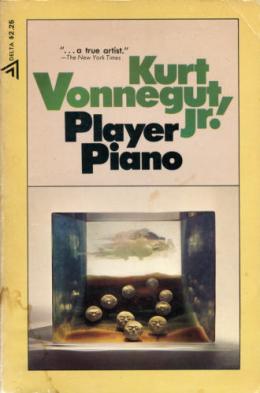
Novel: Player Piano

"a step backward, after making a wrong turn, is a step in the right direction.” 

Player Piano was Kurt Vonnegut's first published novel, and is set in the factory town of Ilium, New York in the near future. In this future scientists and engineers have created machines that now do the vast majority of tasks, leaving most people to either work for the reconstruction and reclamation corps or the army, neither of which serve a purpose besides occupying those who would otherwise be unemployed. Those who do have meaningful jobs by and large oversee the work of machines, which is the position that protagonist Paul Proteus is in when the novel opens. Whilst Proteus' future is bright and he outwardly seems to believe in the society in which he takes part he feels a growing sense of unease with the pointlessness of it all and the alienation of the common man, yearning for some way to break free. When an old friend, Ed Finnerty, comes to see Paul and announces he has left his job it sends Paul towards a revolutionary struggle against the system in a manner more than slightly reminiscent of Huxley's Brave New World.


Whilst the plot may not be original Vonnegut's inimitable style and the slightly closer to home setting of the novel turn it into a very different creature, acting more as a social satire than a heartfelt cry against the system. The machines in Player Piano are still punch card operated and it is not set in a future too far removed from the time when the book was published (1952), leading to a setting less detached from reality than many dystopian novels achieve, which lends weight to the sometimes irreverent style of the novel. The supporting characters are just as three dimensional as Proteus himself, with his wife and their relationship seeming truly plausible and human, and the feeling of despair and rootlessness that Proteus seems to feel resonate strongly with the reader, again helping to stop the book being simply a dry social commentary and instead making it a truly gripping story.


Player Piano is not nearly as polished as Vonnegut's later work, such as Slaughterhouse five, with a side story involving the Shah of a foreign country seeming particularly out of place, but all in all it holds up incredibly well and makes an interesting addition to the genre of dystopian fiction. By the end of the novel Player Piano Seems not to be anti-technology or anti-progress, but rather anti-stupidity, as only Vonnegut could envision.

Sunday, 20 July 2014

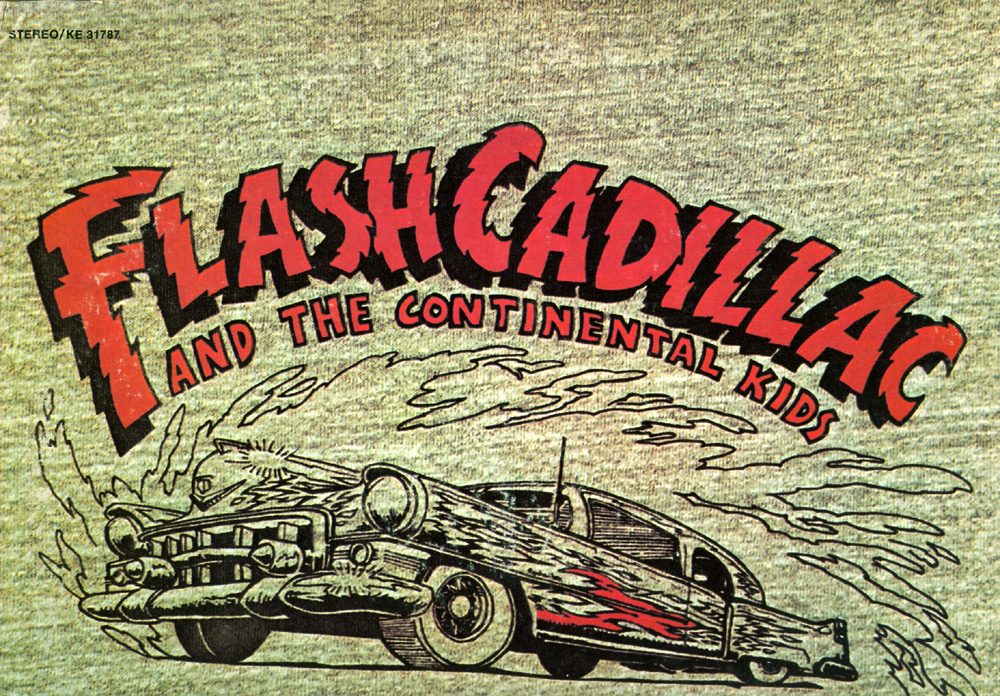
Album: Flash Cadillac and the Continental Kids (Self Titled)

"Flash Cadillac and the Continental Kids are really neat. But my father wants them to stop cruising in our neighbourhood."

Flash Cadillac were an American Rock 'n' Roll band formed in 1969 and most famous for their portrayal of Herbie and the Heartbeats in the film American Graffiti. Flash Cadillac fused their classic 50's Rock 'n' roll sound with the popular Surf style that came afterwards and the result is a sound that departs from the classic sound of artists such as Jerry Lee Lewis and Eddie Cochran whilst still remaining true to the foundations that these legends put down. The first song is an upbeat cover of the country classic Mule Skinner Blues, which tells the tale of a man looking for work, hoping to earn a "Dollar a day". In the Cadillac's version however, this story takes a back seat to the punchy rhythm and variety of strange noises singer Flash accompanies the music with. this opener sets the tone of the album, a classic base from which the band pushes outward, with the finished song sounding as distinctive as if the Cadillacs had written it themselves.
From this country cover the band move on to an original composition named Reputation, A classic fast paced Rock 'N' Roll song about a man's turbulent love life, held together by an unmistakable guitar riff and making use of the Summertime Blues classic Deep voiced authority figure who warns "you better be no later than one, son". Coming straight after the excellent cover of Mule Skinner Blues you could be forgiven for thinking that Reputation  was another tribute, so much does it sound like it was ripped straight from Rock 'n' Roll's golden age.
The third song, Crying in the Rain is a slower paced affair and not nearly as impressive as the opening two, seeming to drag despite being under two and a half minutes long. Whilst not terrible by any means Crying in the Rain seems to be Flash Cadillac's attempt at a classic love song, complete with backing vocals singing "shalalala", but rather than a sincere story of heartbreak it comes across more as a cheesy and lacklustre ballad, lacking a recognisable chorus or guitar riff to pull it together.
Luckily the record soon picks up again, with the fourth and fifth tracks, Teenage Eyes and Betty Lou once again showing what the band are capable of, with both having catchy lyrics and memorable piano and guitar parts to back them up. Betty Lou's call and response "Betty Lou, Betty Lou" evokes images of the classic American teen romance, whilst still managing to feel fresh and distinct from the myriad other songs written on the same subject. 
Rounding off the first side is a cover of the instrumental track Pipeline, which, whilst enjoyable , is not a memorable enough interpretation to set it above the other covers of the song, or indeed the original.
Moving onto side two and the opener She's so Fine, featured in the film American Graffiti. Owing a lot more to the surf sound of bands such as the Beach Boys than it does to the Rock 'n' Roll sound present on the first side of the album, one wonders if this is due to the input of the film-makers or a choice by the band. Whilst this would normally be quite jarring, putting the song on the beginning of side two stops this feeling of discontinuity and the song itself is one of the better to be made after the genre's heyday in the early 60's.
Tell Him No, a plea from the singer for a girl to reject another man, is good but largely forgettable, and one gets the feeling that The Cadillacs had run out of ideas at this point in the album. This feeling is short lived however, and swiftly dispelled by the thumping bass and catchy vocals of the next track Nothin' for Me, a kind of reverse love song in which Flash sings "You're not the only fish in the sea".
This is definitely the standout track of side two, with the following songs lapsing back into the routine of a traditional Rock 'n' Roll song (You Gotta Rock) and Endless Sleep, a forgettable love song, albeit with a menacing guitar sound that does its best to pull the rest of the song up from mediocrity, and almost, but not quite, succeeds.
Ending the album is Up on the Mountain, A fast paced track about a man whose wife ran away with all his money. Again showing just how good Flash Cadillac can be, the song combines good lyrics with recognisable riffs and a bassline that ties the song together, resulting in a Rock 'n' Roll sound that evokes the feeling of the 50's, whilst still being unmistakably theirs.

A link to the full album can be found below:
https://www.youtube.com/watch?v=xIMp0plM0_g

Wednesday, 11 June 2014

Novel: Dance Dance Dance

'Mediocrity is like a spot on your shirt, it never comes off.'

Dance Dance Dance Is a novel by Japanese author Haruki Murakami, first published in 1988. It follows the life of an unnamed narrator as he struggles to make sense of the world around him, and his place within it. Combining a cast of offbeat characters with a world that frequently comes across as unsettling and grim results in possibly the darkest of Murakami's books, but also one of the best, yo-yoing from gripping to disquieting and back again in the space of a few pages, yet managing to be incredibly entertaining throughout.


The world of Dance Dance Dance seems to take aspects of the genre of magical realism, weaving ordinary events with plot devices that would be impossible in the real world. This does not detract from the novel however, with each new impossibility being presented into the book as if it belongs there, with even the bemused narrator accepting such oddities as a clairvoyant 13 year old, or another world accessed through the lift of an expensive hotel. While these concepts seem ridiculous, their placement in a book that is otherwise firmly rooted in reality reduces this improbability, until by the end of the book the reader accepts such concepts as matter of fact, rather than out of place, ultimately enhancing the feel of subtle unease that pervades the text.


The story itself plays out as a series of forking paths, with each being visited in turn, it isn't that there is no coherent plot, but more that this plot is often sidelined in favour of such events as a detour to Hawaii, or a rendezvous with a call-girl. It is to Murakami's credit than none of these deviations seem frivolous or unnecessary, and the way in which he manages to link the vast majority of these unconnected events by the end of the novel is nothing short of masterful, with the reader at no point feeling lost or frustrated. The ever present narrator is the main method by which these seemingly unrelated scenes are brought together, and by the end of the novel one feels close enough to the unnamed protagonist that his experiences truly seem to matter.


If there's one criticism of Dance Dance Dance it is that at times the pacing does seem to be inconsistent, with one scene in a police station dragging on for longer than necessary, but this is a small and infrequent complaint, and does not detract from the overall brilliance of the Novel. the book seems to be written by the author, for the author, yet gives the reader a well crafted window into another's perspective. To quote the narrator 'I don't give a damn about what people say. They can be reptile food for all I care'. It is precisely this attitude that makes Dance Dance Dance such a pleasure to read.

Wednesday, 7 May 2014

Film: Midnight in Paris

"That's what the present is. It's a little unsatisfying because life is unsatisfying."

Midnight in Paris is a 2010 film directed by Woody Allen, set in Paris and focusing on a young Hollywood hack named Gil (played by Owen Wilson) as he attempts to write his first true novel, whilst also dealing with his increasingly rocky relationship. The writing of the novel serves more as a mechanism by which to move the plot forward than the centrepoint it first seems, but this proves to be no bad thing once the film gets going. I say this because the first twenty minutes of Midnight in Paris set the scene for a far different movie to the one that actually plays out, introducing a looming wedding and cracks in the relationship, both of which seem to point towards a more standard romcom type plot than that which actually unfolds.


This assumption is proven wrong during the middle of the first act when the passenger of a 1920's era car pulls up alongside Wilson and motions him inside, handing him a flute of champagne and introducing him to the other occupants of the vehicle. Amongst the passengers of the car are F. Scott and Zelda Fitzgerald, who spirit Wilson's character away to the 1920's heyday that he's always dreamed of living in. It is at this point that the film truly hits its stride, not in the story told but in the pantheon of famous figures introduced to Wilson, including Hemingway, Picasso and Dali (the latter expertly portrayed by Adrian Brody), all wrapped up in a cautionary tale of the dangers of nostalgia.


The story itself is not bad by any means, but in trying to make Gil likeable Allen seems to make the mistake of simply making every other modern day character grating and jaded. Whilst this does the job of making the viewer immediately root for the young writer following his dreams it also results in some modern day scenes dragging on, especially in contrast with the beautifully portrayed and acted world of the 1920's. Added to this is a rather contrived ending that seems tacked on simply to adhere to the Hollywood rule that the main character's life must be perfect by the time the credits roll. Overall Midnight in Paris is not perfect by any means, but is pushed from average to good by the superb depictions of jazz age figures and the inherant likeability of Wilson's character.

Monday, 21 April 2014

Novel: The Path to the Spiders' Nests

"The writer, after writing, finds that he is the poorest of men.”

The debut novel of the 20th century novelist Italo Calvino, The Path to the Spiders' Nests is set in Italy during the Second World War and finds the protagonist, a young boy named Pin, embroiled in the conflict between the Fascists and Partisans. Despite this rather grim setting the novel manages to swing between haunting images of wartime brutality and the genuinely funny passages based around a young boy's utter confusion at adult infatuation with women and fighting, and their disregard of things Pin considers important, such as the titular area in which the spiders make their nests.


Pin is an orphan living in a small Italian town, with his only remaining family member being his abusive sister, the neighbourhood whore. Due to this unorthodox upbringing Pin is shunned by children his own age, and instead spends his time at the local bar, entertaining and infuriating the men who drink there. This is the scene as the novel begins, but the arrival of the war to this sleepy town leads to Pin's arrest for stealing a pistol, and subsequently to his escape and residence with a ragtag group of Partisans, considered such a danger to the cause that they are denied any real role in the plans of the Communist resistance.


Anybody familiar with Calvino's later work can see that the plot of The Path to the Spiders' Nests is one of the authors less surreal works, but this is not to say that it lacks the charm of later novels such as If on a Winter's Night a Traveller, rather that it channels this charm in a different way. Throughout the story Calvino uses Pin's young age as a device to allow numerous secondary characters to explain ideas and experiences as diverse as Communism, love and writing to him, many of which seem to be the Author speaking directly to the reader and trying to get across his own point of view. In one of these monologues a character confides his reasons for fighting, saying "I may not accomplish great deeds but history is made up of little anonymous gestures" a passage that really hammers home what Calvino is trying to write, not so much a war novel as a novel detailing part of the life of one anonymous child caught up in the death and destruction of World War Two, and at this it succeeds enormously well.


The Path to the Spiders' Nests is not perfect however, with the simplicity of the main character at times growing slightly tiresome, and an ending which seems the work of a writer of far lesser talent than Calvino, leaving a real sense of disappointment when one turns the page and realises that the novel is in fact finished. These shortcomings can be attributed to Calvino's inexperience at the time of writing however, and if considered against the book as a whole, these complaints are minor. Overall The Path to the Spiders' Nests is well worth reading, and if it does not reach the heights of Calvino's later work, this is more a reflection of their brilliance than this books failings.

Monday, 7 April 2014

Novel: Mockingbird

"thank God that I can read, that I have truly touched the minds of other men.” 


Perhaps more famous for his novel turned film The Man Who Fell To Earth, Tevis is one of the few science fiction writers who can truly be said to break into the realms of literature, as opposed to simple fiction. Mockingbird was written in the years leading up to Tevis's death from cancer and as such has a rather bleak tone, focusing on the themes of depression and heartbreak in a society in which even looking somebody in the eye is considered a gross invasion of privacy. Set in a dystopian future in which humanity is infertile, apathetic and on the slow path to extinction Mockingbird reads like an unofficial sequel to both  Brave New World and Fahrenheit 451, taking the former's theme of chemical dependency and the criminalisation of love coupled with the latter's abhorrence of books and intellectualism in general to create possibly one of the most depressingly plausible "what-if" novels ever written . Humanity's decline is due to the whim of those alive hundreds of years previous to the time in which the novel takes place and has been caused by the creation of robots to cater to every need, leaving the population with nothing productive to do. This leads to the the belief that it is better to take drugs and forget the world, rather than deal with the possibility of pain and boredom that accompanies lucidity.


The novel itself follows the lives of 3 characters who reject this doctrine, a  "make nine" robot named Spofforth, the most intelligent android ever created and almost human in complexity, a university professor named Bentley who commits the crime of teaching himself to read and the woman Bentley befriends and falls in love with, named Mary Lou. Alternating between the viewpoints of these 3 characters, Tevis' novel does what any good dystopian novel strives to do, reveal something about the world we live in by taking it to its logical extreme. indeed Mockingbird seems to be a cry of despair from the author, who wrote in The Man Who Fell To Earth “The strange thing about television is that it doesn't tell you everything.” And indeed throughout the novel it is shown that the entirety of humanity does nothing but take pills, watch television and let civilisation crumble around them, with only Bentley and Mary Lou seeming to understand the horror of their existence.


The brilliance of Mockingbird is that it taps into many readers sense of despair at the modern world without coming across as sanctimonious or pretentious, the reader is left to decide whether the pain, heartbreak and occasional depression felt by the main characters is preferable to the listless existence of the masses, and Tevis uses the alien backdrop of the society he has crafted to bring into focus the truly human relationships of these characters, giving the novel a romantic overtone that is present throughout . It takes a truly great writer to craft a character so human that one feels they can truly understand why they feel as they do, and Tevis manages this with not just 1, but 3 characters, as well as crafting a world that is truly unsettling in its plausibility, an incredible feat and one that deserves recognition.

Monday, 31 March 2014

Film: The Man Who Wasn't There


"Me, I don't talk much...I just cut the hair"

The Man Who Wasn't There is a Coen Brothers film released in 2001. Shot entirely in black and white in order to enhance the neo-noir style, it follows a small town barber named Ed Crane as he struggles with every problem Joel and Ethan Coen can think to throw at him. Throughout the film Ed has to deal with an alcoholic wife, an affair, multiple deaths,  court trials and the mental breakdown of family members, to name but a few, dealing with each in the same silent, chain smoking manner. Lead actor Billy Bob Thornton truly carries the film, providing the narration that ties the story together as well as managing to create an alienated yet ultimately sympathetic lead role in that of Ed Crane, not an easy combination by any means. Stand-out scenes include Ed's musings on life and the universe, centred around the seemingly unstoppable growth of hair, as well as the court room scene in which Sacramento lawyer Freddy Reidenschneider (played by Tony Shalhoub) constructs a defence that centres on the uncertainty principle and the common man in a masterfully written speech that Crane says "Even had me going".

 If this review doesn't seem to focus on a story in any real sense this is because The Man Who Wasn't There is most definitely one of the Coen Brothers less plot orientated films, with the Brothers content to simply create the cast and let them meander through life as they please. Whilst on paper this looks to be a disastrous move the spellbinding performances of all of the cast members mean that it's only when the credits roll that you actually realise how little structure there is in the film's 2 hour running time. This meandering path is also wryly acknowledged by the writers, with Crane saying in one of the final scenes "Pardon me if sometimes I've told you more than you wanted to know". Despite this acknowledgement the film does seem to be elongated, more befitting a 90 minute run time than the 2 hours it is given, but this seems a small complaint in the face of a window into the human condition so gripping that sometimes it seems hard to believe that the characters on screen are not in fact real people, forced to deal with hardships beyond their comprehension.